

Cast Iron vs Steel Bathtubs: Which Should You Buy?
Posted by admin on Jul 6th 2026
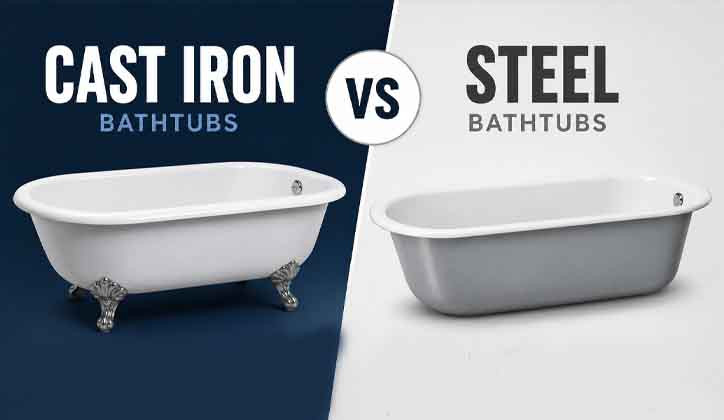
Choosing a bathtub is one of the biggest decisions when remodeling a bathroom or building a new home. Most buyers get confused, especially when it comes to the question of which is best: Cast Iron vs Steel Bathtubs. While both may seem the same at first glance, their durability, weight, heat retention, and practical usage experience are completely different.
Choosing the right material for your home is even more important in tropical climates or humid climates like Miami or Orlando, Florida. This decision will depend on whether you are looking for a luxurious tub that will last a lifetime or a budget-friendly, easy-to-install option.
If you want long-lasting durability, excellent heat retention, and a premium luxury feel, then a Cast Iron Bathtub is the best choice for you. It lasts a lifetime, but it is also heavier and more expensive. On the other hand, if your budget is limited, the bathroom is on the second floor of the house, and you want to make installation easier, then an Enameled Steel Bathtub is a smart and affordable option.
Comparison of Cast Iron and Steel Bathtubs at a Glance
To help you make a decision, the main differences are highlighted below:
|
Features |
Cast Iron Bathtub |
Enameled Steel Bathtub |
|
Weight |
Extremely heavy (300 - 500+ pounds) |
Medium and light (75 - 90 pounds) |
|
Heat Retention |
Excellent (keeps water hot for a long time) |
Low (loses heat quickly) |
|
Durability |
50+ years (lifetime scratch and chip resistant) |
15 - 20 years (risk of chipping or cracking) |
|
Noise Control |
Very quiet (no sound of water falling) |
Noisy (produces echo or vibration) |
|
Price |
Premium ($1,000 - $3,000+) |
Budget-friendly ($300 - $700) |
|
Installation complexity |
Very difficult (requires additional labor and floor reinforcement) |
Easy (one or two plumbers can easily do it) |
|
Maintenance |
Very simple, acidic cleaners should be avoided. |
Simple, but quickly rusts if chipped |
|
Best Use |
Luxury Home, Forever Home, Master Bath |
Rental property, condo, guest bathroom, second floor |
What Is a Cast Iron Bathtub?
Cast iron bathtubs are made by pouring molten iron into a mold (Liquid Iron Casting). A very thick layer of liquid porcelain enamel is sprayed on it and baked at a temperature of about 1,600 degrees Fahrenheit. In this process, the enamel and iron are fused together, creating a surface as hard and smooth as a rock. Its enamel layer is about 3 to 4 times thicker than that of a steel tub, making it scratch-, chemical-, and impact-resistant.
What Is an Enameled Steel Bathtub?
Enamelled steel bathtubs also called Porcelain-on-Steel are made by forming a lightweight, thin steel sheet into the shape of a bathtub using a hydraulic press. A thin layer of porcelain enamel is then applied to the top and fired at high temperatures. Because the base metal is thin and malleable, the steel can flex slightly when dropped on it, potentially chipping or cracking the fragile porcelain enamel on top.
Why Two Bathtubs with the Same Porcelain Enamel Feel Completely Different
Many people ask, if both tubs have porcelain enamel on them, why are their fills so different?
The secret lies in their Base Metal Thickness and Enamel Fusion Process. Cast iron is extremely dense and thick, which provides a solid base for the enamel. When you touch a cast-iron tub, it feels solid, like a heavy rock.
On the other hand, the thin metal sheet of a steel tub vibrates slightly, making the enamel coating on top look the same but feel a bit light and "tinny" to the touch and in use.
Heat Retention Test: Real-World Soaking Experience
Who doesn't love to soak in a bathtub for a long time? But if the water cools down too quickly, the experience is ruined. Here's a realistic timeline of how the water temperature drops in an air-conditioned (AC) room in Florida:
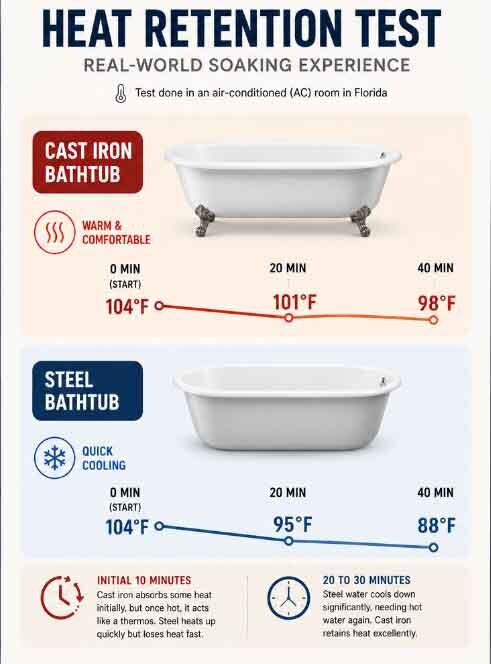
- Initial 10 Minutes: Cast iron initially absorbs some of the heat from the water, but once it's hot, it acts like a thermos. Steel tubs heat up quickly, but because the metal is thin, it quickly releases heat into the surrounding air.
- 20 to 30 Minutes: At this point, the water in the steel tub will have completely cooled down, so you will need to add hot water again. Cast iron retains the water temperature excellently even during this time.
Which Tub Makes More Noise?
Tranquillity is very important in the bathroom. There is a big difference in sound between steel and cast iron:
- Impact & Vibration: The steel tub acts like a drum. When water is poured through the high-pressure faucet, it creates a resonance or echo. Even moving your feet inside the bathtub can cause slight vibrations.
- Sound Insulation Solution: If you choose to purchase a steel tub, you will need to use spray foam insulation or dense underlayment under and around the tub during installation. Cast iron does not require any insulation; it is naturally completely silent.
Can Your Bathroom Floor Support a Cast Iron Tub? Decision Tree
An empty cast iron tub weighs 350 to 500 pounds. When you add 40-50 gallons of water (about 400 pounds) and the weight of a person (150-200 pounds), the total weight can exceed 1,000 pounds.
To understand whether your floor can handle this weight, consider the decision matrix below:
Is your bathroom on the second floor?
├── Yes ──> Is the floor joint 2x10 or larger?
│ ├── Yes ──> Have it checked by an architect/structural engineer (reinforcement may be required).
│ └── No ──> Avoid cast iron; choose steel or acrylic.
└── No (Ground Floor/Slab) ──> Direct installation is possible if it is a concrete slab.
Warning: Be sure to consult a professional contractor before installing a cast iron tub on the second floor of an older Florida crawlspace home or a home with wood joints.
Hidden Costs Buyers Forget Before Choosing a Cast Iron Tub
Many people buy bathtubs based solely on the store price, but there are some hidden costs with cast iron that can ruin your budget:
- Floor Reinforcement Cost: Installing additional wooden supports or joists under the floor can cost between $300 and $800.
- Delivery & Labor Fee: It cannot be delivered by a regular courier. It requires a 3-4 strong crew or special equipment. In Florida, additional labor costs may be $150-$300 more.
- Stairway Navigation: If your bathroom is on the second floor and the stairs are narrow, opening doors or additional architectural modifications will increase the cost.
Best Bathtub by Home Type & Budget
Choose the right tub based on your home style and budget:
Home Type Recommendation Table
|
Home Type |
Ideal Bathtub (Best Choice) |
Why choose? |
|
Luxury Home / Forever Home |
Cast Iron |
Provides maximum resale value and a royal look. |
|
Condo / Apartment (Upper Floor) |
Enameled Steel |
Best for weight restrictions and easy replacement. |
|
Rental Property / Airbnb |
Enameled Steel |
Low initial investment and easy to replace if damaged. |
|
Family House with Kids & Pets |
Cast Iron |
Children don't have to worry about getting scratches from toys or pet nails. |
Budget Matrix
- Under $500: Feel free to choose Enamelled Steel. It is possible to find good quality American Standard or Kingston Brass on this budget.
- $500 – $1,000: Premium steel tub or basic-size alcove cast-iron tub.
- $1,000+: Luxury freestanding or clawfoot cast iron bathtub.
Best Kohler Cast Iron Bathtubs
If you've decided to buy a cast iron tub, these two models from the Kohler brand are the best in the world:
1. Kohler Mendota Cast Iron Tub
This is a classic 60-inch alcove design. For those who want the luxury of cast iron in a simple bathroom layout, the Kohler Mendota cast iron tub is a great option. Its depth and wide design are perfect for long, relaxing soaks.
2. Kohler Seaforth Enamelled Cast Iron Tub
If your bathroom is a little tight on space, the 54-inch Kohler Seaforth enameled cast iron tub is ideal for you. It fits into a small space while still ensuring all the premium benefits of cast iron.
When Steel Is Actually the Better Choice
While cast iron is good, in some practical situations, a steel tub is the smartest choice:
- Easy replacement: If you're thinking of selling your house in the next 5-7 years, it doesn't make sense to spend a fortune on cast iron.
- DIY remodeling: If you love to do bathroom work yourself, then moving a cast iron tub alone is impossible. A steel tub can be handled by even a layman.
Expert Recommendation: Decision Matrix
Follow the guidelines below to make a final decision at the last minute:
Choose Cast Iron if...
- You want a tub that will outlast you (Lifetime Investment).
- To you, a tub bath means lying in hot water for a long time (deep soaking).
- The silence and solid feel of the bathroom are your first choice.
- Your budget and floor capacity are sufficient.
Choose Steel if...
- You're doing a quick and affordable bathroom makeover.
- Not wanting to take risks in the second-floor bathroom due to weight issues.
- This is a guest bathroom or rental property where usage will be relatively low.
To make your bathroom project a success and see the authentic collection of the right brand, visit Shop All Bathtubs and choose the tub of your choice.
FAQs about Cast Iron vs Steel Bathtubs
Do cast-iron bathtubs rust over time?
The porcelain coating on cast iron is very thick, so it doesn't rust. However, if the enamel chips for some reason, exposing the iron inside, and it's not repaired for a long time, a little rust may form.
How long does a steel bathtub last?
A good quality enameled steel bathtub can easily last 15 to 20 years with proper care. However, scratches or chipping can shorten its lifespan.
Why are cast iron and steel better than regular acrylic tubs?
Acrylic tubs, being plastic, are prone to scratches and discolouration over time. The porcelain surface of cast iron and steel is much glossier, more hygienic, and more chemical-resistant.
If you have any questions about which one would suit your bathroom size and floor plan best, let us know in the comments below!