

Smart vs Traditional Toilets: Which Suits Your Bathroom?
Posted by admin on Feb 10th 2026
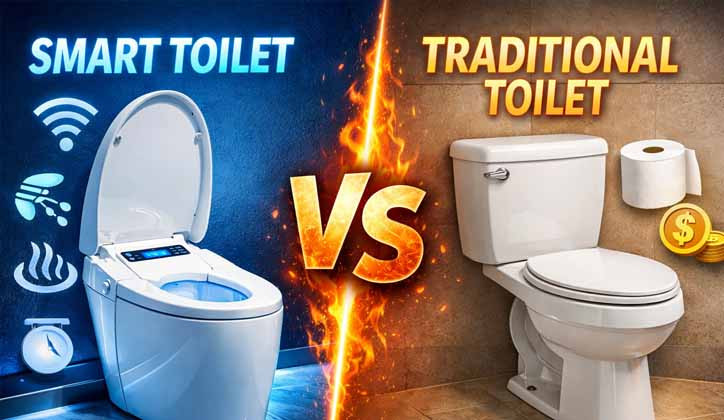
The debate between Smart Toilets and Traditional Regular Toilets is a hot topic when it comes to modern bathroom remodelling or new home construction. This decision is now being made by homeowners in the United States not just based on budget, but also on long-term convenience and hygiene.
In this guide, you can learn about which one is best for your bathroom, depending on your budget, required comfort, and ease of installation.
What Is a Smart Toilet?
Smart toilets are advanced plumbing fixtures that make the user experience easier and healthier through built-in technology. In line with modern American bathroom design trends, they are now becoming a necessity rather than just a luxury.
A toilet is smart when it is equipped with electronic sensors and control panels. These toilets have a dedicated area in the bathroom.
Common features of smart toilets are:
- Auto Flush: Hands-free automatic flush after use.
- Integrated Bidet: Water cleaning system and hot air dryer.
- Heated Seats: Cozy warmth on a winter morning.
- Deodorizer: A filter to keep the air in the bathroom fresh.
Using them reduces dependence on toilet paper and adds a new level of hygiene.
What Is a Traditional Regular Toilet?
The traditional or regular toilet is the standard system we've seen in American homes for decades. It works primarily based on a gravity-flush system.
These toilets do not have any electronic parts. When you press the flush handle, the water in the tank flows down using gravity and cleans the waste. It does not require any electricity and its mechanism is very simple. Standard toilets with a rating of 1.28 GPF (Gallons Per Flush) or 1.6 GPF are the most popular in the United States.
Smart Toilet vs Traditional Toilet: Side-by-Side Comparison
The table below summarizes the main differences:
|
Features |
Smart Toilet |
Traditional toilet |
|
Hygiene |
Very advanced (bidet and self-cleaning) |
Normal (toilet paper dependent) |
|
Comfort |
Premium (Heated Seats, Night Light) |
Basic (simple plastic/ceramic seat) |
|
Water usage |
Controllable and economical (Dual Flush) |
Specific (according to GPF rating) |
|
Electricity |
Required (Electrical Outlet Must) |
No need. |
|
Installation |
Need a complex and professional plumber |
Easy and affordable |
|
Cost |
High price ($1,500 - $5,000+) |
Affordable ($200 - $800) |
Hygiene & Comfort: Why Smart Toilets Are Considered More Advanced
The difference between a smart toilet and a regular toilet in terms of hygiene is vast. The integrated bidet system in a smart toilet cleanses the skin without using hands, which is much more hygienic than toilet paper.
Smart toilets are especially designed for the elderly and mobility issues. Seat heating and auto-lid opening systems make using the bathroom much easier for them.
The premium smart toilets available at RoyalBathPlace feature advanced bidet systems and dryers, designed to ensure daily hygiene and comfort.
Cost Comparison of Smart Toilet vs Regular Toilet
When setting a budget, you need to consider two aspects: initial purchase and long-term maintenance.
- Upfront Cost: You can get a good-quality standard toilet for between $200 and $500. But smart toilets start at $1,000 and can go up to over $5,000 depending on the features.
- Maintenance: If the electronic parts of a smart toilet break, the repair costs are much higher. On the other hand, if the flush valve or flapper of a regular toilet breaks, it can be fixed for only $20-$50.
- Value: Smart toilets help increase the resale value of your home.
Installation, Plumbing & Maintenance Differences
Installing a regular toilet is easy; you just need to replace the old one with a new one. But smart toilets present two additional challenges:
- Electrical Outlet: There must be an electrical connection within 3 feet of your toilet.
- Technical Setup: The Sensor and water filter setup requires an experienced plumber.
In terms of maintenance, it is important to regularly clean the smart toilet sensor or bidet nozzle to prevent it from becoming blocked due to hard water.
Water Efficiency & Eco-Friendliness
A common misconception is that smart toilets use more water. This is completely wrong. In fact, smart toilets are more eco-friendly.
- Dual Flush: Most smart toilets automatically adjust the water flow based on the type of waste.
- Paper Saving: Using a bidet reduces toilet paper usage by about 80-90%, which plays a major role in protecting the environment.
- GPF Efficiency: Smart toilets in the United States typically use under 1.28 GPF of water, which is very economical.
Who Should Choose a Smart Toilet?
If you fall into the following categories, investing in a smart toilet would be right for you:
- Modern Homes: If you want to give your bathroom a modern spa-like look.
- Seniors & Disability: This is best for maintaining the independence of elderly people at home.
- Tech Enthusiasts: Those who like to make life easier through technology.
- Hygiene-First Users: Those who prefer to stay clean with water instead of toilet paper.
At Royal Bath Place, we offer a collection of the best smart toilets compatible with the American lifestyle.
Who Should Stick With a Traditional Toilet?
Smart toilets aren't for everyone. You should opt for a regular toilet if:
- Your budget is limited.
- You prefer a very simple and hassle-free system.
- There is no possibility of providing any electrical connection in the bathroom.
- You live in a rented house where no major changes are possible.
FAQs about Smart Toilet vs Regular Traditional Toilet
Which is better, a smart toilet or a regular toilet?
It depends on your needs. Smart toilets are best for hygiene and comfort, but traditional toilets are better for budget and long-term use.
Do smart toilets use more water?
No, smart toilets are designed to reduce water waste. They use less water than regular toilets because they have sensors and dual flush technology.
What are the disadvantages of smart toilets?
The main disadvantages are the high price, the need for an electrical connection for installation.
What is the lifespan of a smart toilet?
A good quality smart toilet can easily last 10 to 15 years. However, its electronic parts can wear out faster than its mechanical parts.
Do smart toilets flush without electricity?
Some models have backup batteries or a manual flush button, but in most cases the bidet or auto-flush will not work if there is no power.
Which toilet is better, 1.28 or 1.6 GPF?
1.28 GPF toilets are more modern and water-efficient. They are EPA WaterSense certified and will reduce your water bill in the long run.
Conlcusion
In conclusion, if you can afford it, investing in a smart toilet will make a big difference in your lifestyle. It will not only enhance the beauty of your bathroom but also improve your daily hygiene. On the other hand, if you just want the job done and want to avoid the extra hassle, a high-quality traditional toilet will suffice for you.
Visit Royal Bath Place today to upgrade your bathroom and explore premium smart toilet options. Our experts will help you choose the best solution within your budget.